

As Henley Royal Regatta begins, volunteers reveal antibiotic-resistant bacteria found in the Thames at Henley including resistance to a last-resort antibiotic
Preliminary findings from a citizen science project raise urgent questions about water quality on one of the world's most famous stretches of river, just as thousands gather for this year's Regatta
As crowds arrive in Henley-on-Thames for the start of Henley Royal Regatta today, volunteers testing the river have revealed antibiotic-resistant E.coli at every location sampled along this iconic reach including resistance to imipenem, a carbapenem antibiotic used only when all other treatments have failed.
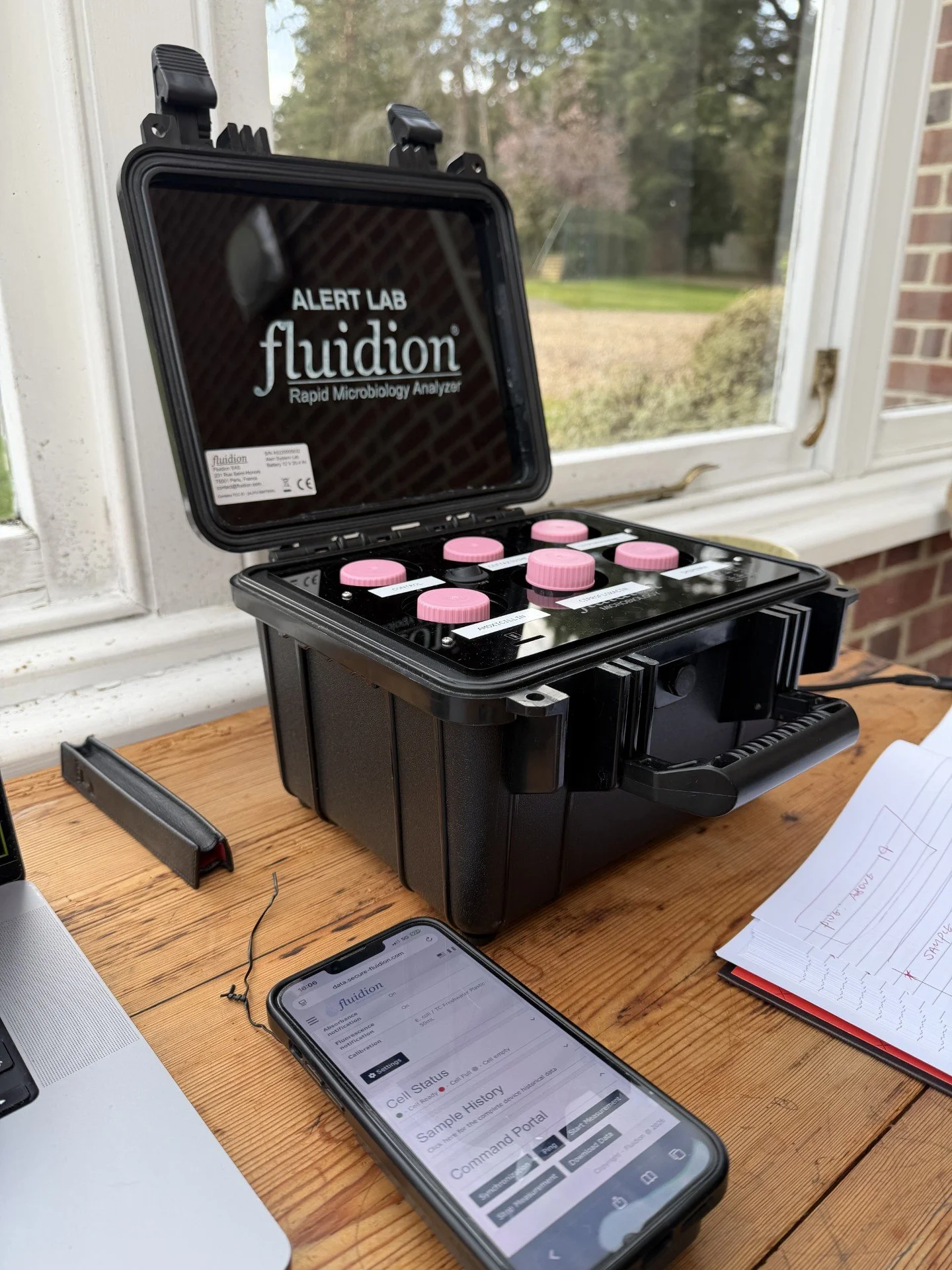
The findings come from a collaboration between HoTWater, a Henley-based citizen science organisation, and Fluidion, who provided their new ALERT Lab equipment for beta-testing as part of the Testing the Waters Consortium. Across nine sample batches collected between April and May 2026, the team tested E.coli survival against five clinically important antibiotics at sewage treatment works effluent and river sampling points around Henley, the very stretch of water that will host this year's rowing.
Key findings include:
Antibiotic-resistant E.coli was detected at every site tested
Wargrave Sewage Treatment Works was identified as the dominant upstream source of antibiotic-resistant E.coli entering this reach of the Thames, via the River Loddon confirmed by a sharp jump from 20 CFU/100ml at Shiplake Lock to 1,028 CFU/100ml just past the confluence
Co-trimoxazole resistance was the most consistent finding at every site, peaking at Henley STW at 1,010 CFU/100ml in the resistant fraction alone
Imipenem resistance resistance to a last-resort antibiotic was detected at four sites
Dramatically elevated resistance levels were found at Henley STW, with independent corroboration from a separate ESBL study at an Oxford STW
The findings are preliminary, drawn from a small dataset using unvalidated beta equipment, and the team stresses they are intended to justify further investigation, particularly expanded summer sampling rather than to draw definitive conclusions.
HoTWater is part of the Testing the Waters Consortium (TTW), formed less than a year ago at the UK River Summit in July 2025. In under twelve months, the TTW has grown from a suggestion to work together to the most diverse water monitoring coalition ever assembled in the UK, with over 90 members including citizen scientists, regulators, water companies, technology manufacturers and NGOs, entirely independent and unfunded meaning they can be agile in their approach.
Chris Szweda, co-founder of HoTWater and trustee of Future for Water, said: "These findings point to something that needs urgent further investigation. The fact that we found imipenem-resistant bacteria, resistant to an antibiotic of last resort, at four sites on this stretch of the Thames raises serious questions, particularly with the Regatta now bringing thousands of competitors and spectators to the riverbank. This is exactly why citizen science matters. We go where the regulators can't always reach, and we ask the questions that sometimes don't get asked."
The full findings will be presented publicly for the first time at The River Summit and Festival on 4th and 5th September in Henley-on-Thames, alongside a wider programme of citizen science projects on the Thames including real-time water quality monitoring, eDNA bacterial source tracking and high-resolution river mapping using uncrewed surface vehicles.
Claire Zambuni, founder of Future for Water, said: "The Testing the Waters Consortium is less than a year old, entirely unfunded and built entirely on the passion and expertise of the people in it. The fact that it is already producing findings of this significance, findings that raise real public health questions just as the world's eyes turn to Henley for the Regatta, is an extraordinary testament to the members of the Consortium's drive to produce meaningful data that can be used to improve the quality of our waterways."